Grant Zhong
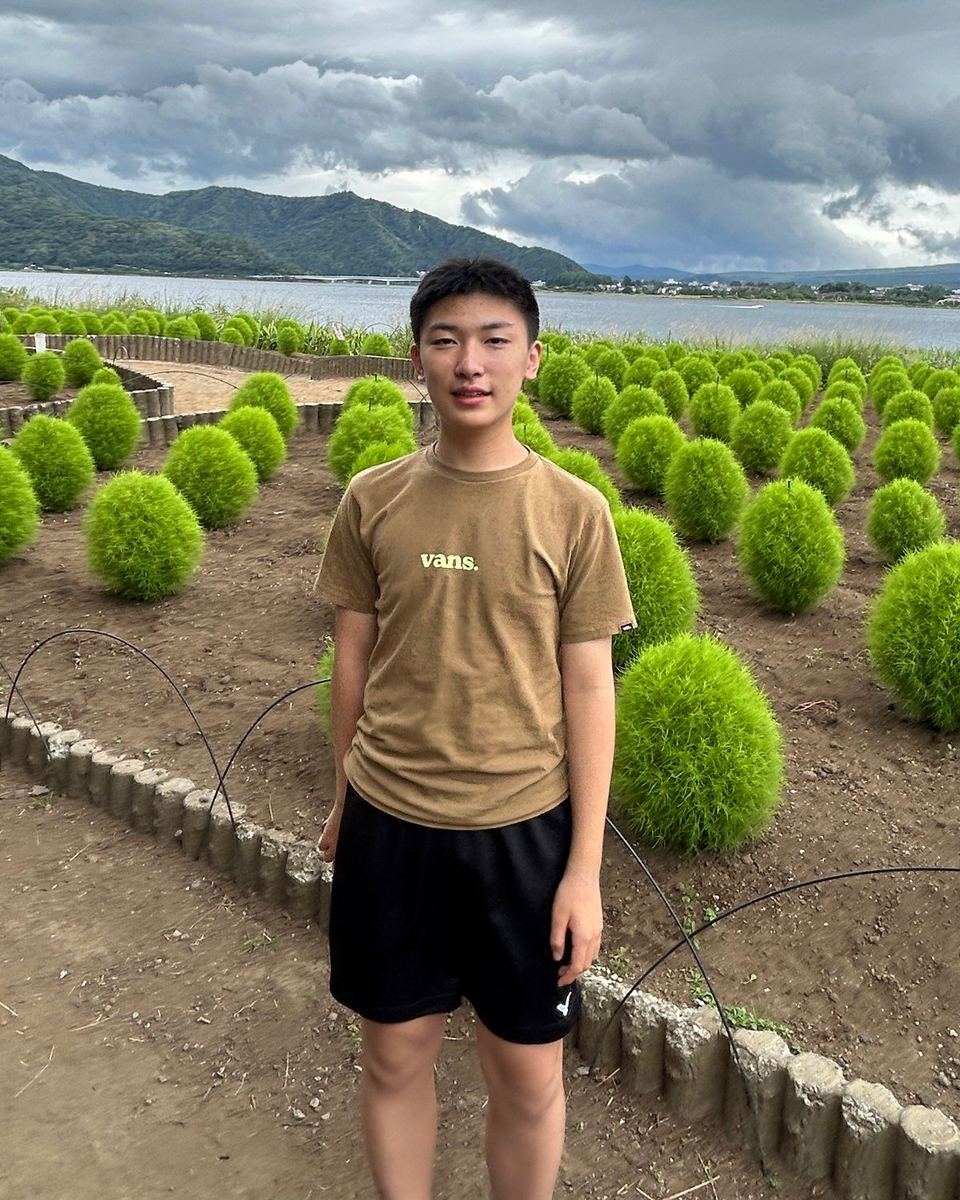
I am in twelfth grade at Mountain View High School. What I work on is keeping sustainability actually sustained, which usually comes down to something unglamorous: cutting the waste out of how things are made and sold, so that a sustainable business can also pay for itself.
A practical kind of optimism
I have never been interested in sustainability as a slogan.
I am interested in what happens after: how water moves through a drip line, how carbon becomes measurable, how a farm byproduct acquires value, how a tool becomes affordable, and how an idea survives contact with people.
The path has not been linear.
Aquaponics allows for water efficiency. Water efficiency allows for cheap tools and sensor power. Soil carbon allows for markets and digital verification. Gardens and food lines allow for writing about agriculture as a social system.
In practice that has meant a closed-loop tilapia system producing about fifty pounds of greens a year, then redesigning it so a community garden could keep it running with minimal maintenance.
Sustainable agriculture has challenged me with solving real world problems. Business taught me that a solution has to support itself economically.
I seek to make sustainability actually last.
Where AgriFutureLab has got to
We teach youth to cut the waste out of a small business, so the sustainable version is the one that stays, reducing waste.
Five beginner modules are live, along with workshops, a resource library of guides and printable tool designs, and pilots with local farms and community gardens. The first project taken all the way through, a gravity-fed drip kit, is listed on Farmish Store.
Other things I have built
- Tilth
- A nonprofit marketplace that pays small California farms for the carbon their soil keeps in the ground. It has engaged 8 farms and drawn 1,200 visitors to the marketplace. Visit Tilth
- Farmish Store
- 3D-printed nursery and garden tools, field-tested with volunteers and priced about 60% under retail, plus a gravity-fed drip kit drawn in OpenSCAD.
- Farm 2 Form
- An exchange for agricultural waste: ugly fruit, corn husks, hemp stalks and nut shells sold on to small businesses making cosmetics, vegan leather and packaging.
- Green Cart Pass
- Carbon-neutral shipping and packaging plug-ins for small online stores, with an option at checkout to cover the footprint of the order.